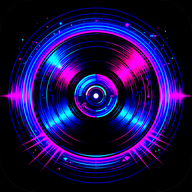
What music-reactive visuals are
They're images built from the sound that's playing: the kick makes shapes jump, the bass deepens the colors, the drop makes the whole frame explode. Unlike a pre-made background video, they always match the track, whatever you play.
Where to use them
- Short clips to promote a set or a new track on social media.
- The screen behind the DJ at bars, parties, and small events without a dedicated VJ.
- Listening at home, with something to look at.
Recording a clip with great sound
- Put the visuals in full screen and hide every control.
- Record the screen with the built-in tools: Cmd + Shift + 5 on macOS, Win + Alt + R (Xbox Game Bar) on Windows.
- Sort out the audio. macOS's built-in recorder usually only captures the microphone. The cleanest fix is to drop the original music file into your video editor and line it up with the picture. It sounds better than recording through speakers anyway.
- Need a vertical clip for phones? Record full screen, then crop to 9:16 in the editor. Pick a style that's centered so the crop keeps the best part.
Tips for professional-looking clips
- Use the drop, 15–30 seconds of it. Short clips should start with the best part.
- One visual style per clip. Switching styles constantly is hard to watch.
- Match the mood: dark, heavy tracks suit minimal visuals; bright tracks suit color and motion.
- Add the track and DJ name in a corner when editing, so viewers know where to find it.
With TaxonomyDJ
Visuals in TaxonomyDJ come in 37 styles that move with the beat, spectrum, and waveform of the playing track: a black hole, butterfly wings flapping on the beat, a laser show, a stardust galaxy, and more, plus 12 effects you can stack. Press F for full screen, switch on performance mode to hide every button, and pick a video on your computer as the background if you like. Drag-and-drop playlists, reordered with the mouse. Free on every plan.